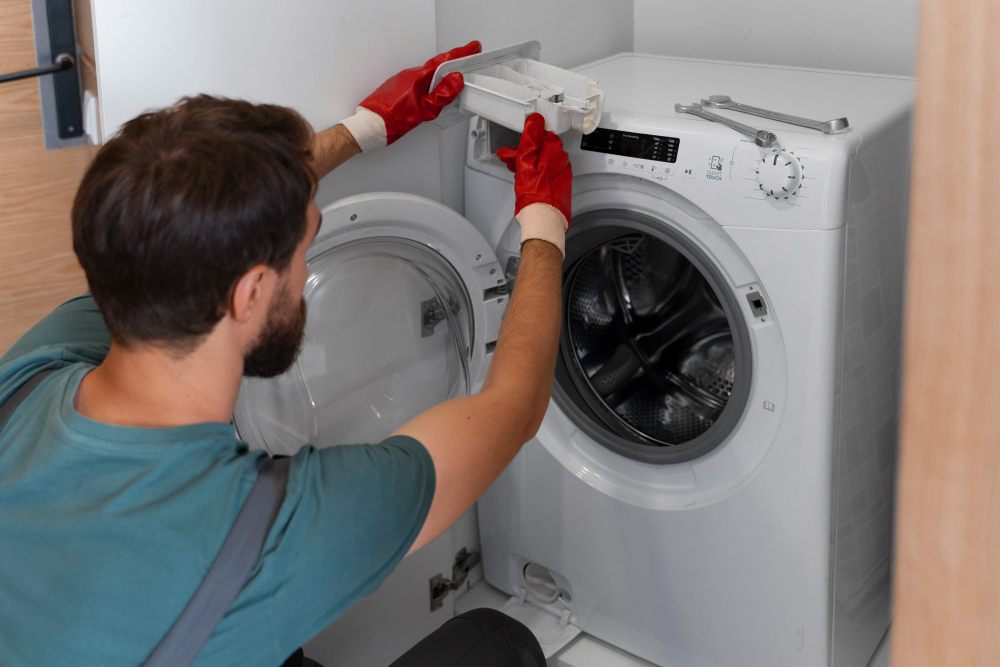
A bad smell coming from your washing machine can be annoying and confusing. You expect fresh laundry, but instead, you notice a musty or sour odor every time you open the washer. Many homeowners in Surrey deal with this problem and wonder if their machine is failing.
The good news is that most washer smells come from hidden causes that are often easy to identify. In this guide, we explain why washing machines smell bad, what’s happening inside, and when professional appliance repair or washing machine repair becomes necessary.
Common Washing Machine Smells and What They Indicate
Different smells usually point to different problems inside the washer.
Musty or Damp Smell
This is often caused by trapped moisture and mold growth inside the drum or door seal.
Rotten or Sour Odor
This usually means bacteria buildup from leftover detergent, dirt, and water.
Sewage-Like Smell
This can be linked to drainage or plumbing issues connected to the washer.
If these smells keep coming back, it may be time to consider professional washer repair services in Surrey.
Hidden Causes of a Smelly Washing Machine
1. Mold and Mildew Inside the Washer
Washers create a warm and wet environment, which allows mold to grow easily.
Problem areas include:
- Rubber door gasket
- Detergent drawer
- Inner drum
Front-load washers are especially prone to this issue.
2. Using Too Much Detergent
Extra detergent does not improve cleaning. Instead, it leaves residue that traps dirt and bacteria.
Over time, this buildup causes strong odors and poor washer performance.
3. Clogged Drain Pump or Hose
When water cannot drain fully, it sits inside the washer and begins to smell.
Common causes include:
- Lint buildup
- Small objects like coins
- Soap residue
Drain problems often require professional washing machine repair.
4. Dirty Washer Filter
Many people don’t know their washer has a filter. If it’s never cleaned, it becomes a source of odor.
A clogged filter can also affect how well your washer drains water.
5. Too Many Cold Water Washes
Cold water saves energy, but it does not kill bacteria.
Running only cold cycles allows germs to build up, leading to unpleasant smells.
Simple Ways to Prevent Washer Odors
Before calling for appliance repair, try these easy maintenance tips:
- Leave the washer door open after use
- Wipe the door seal weekly
- Use the correct amount of detergent
- Run a hot cleaning cycle once a month
- Clean the detergent drawer regularly
These steps help prevent odors but won’t fix mechanical issues.
When to Call Washer Repair Services in Surrey
You should search for washer repair near me if:
- The smell keeps returning
- Clothes still smell after washing
- Water does not drain completely
- The washer makes unusual noises
These signs usually mean internal parts need attention.
How Professional Washing Machine Repair Solves the Problem
Expert washer repair services in Surrey go beyond surface cleaning.
Technicians can:
- Remove internal buildup
- Fix drainage problems
- Clean hidden components
- Restore proper washer function
This ensures long-term results and better laundry hygiene.
Conclusion: Fresh Laundry Starts With the Right Repair
A bad-smelling washer is more than a minor issue—it’s a warning sign. Ignoring it can lead to bigger repairs and unhealthy laundry conditions. When home cleaning methods don’t work, professional washing machine repair is the best solution.
If you’re searching for reliable washer repair near me in Surrey, expert technicians can help restore freshness and performance. AMP Appliance Repair provides trusted local appliance repair services that address the root cause—not just the smell.